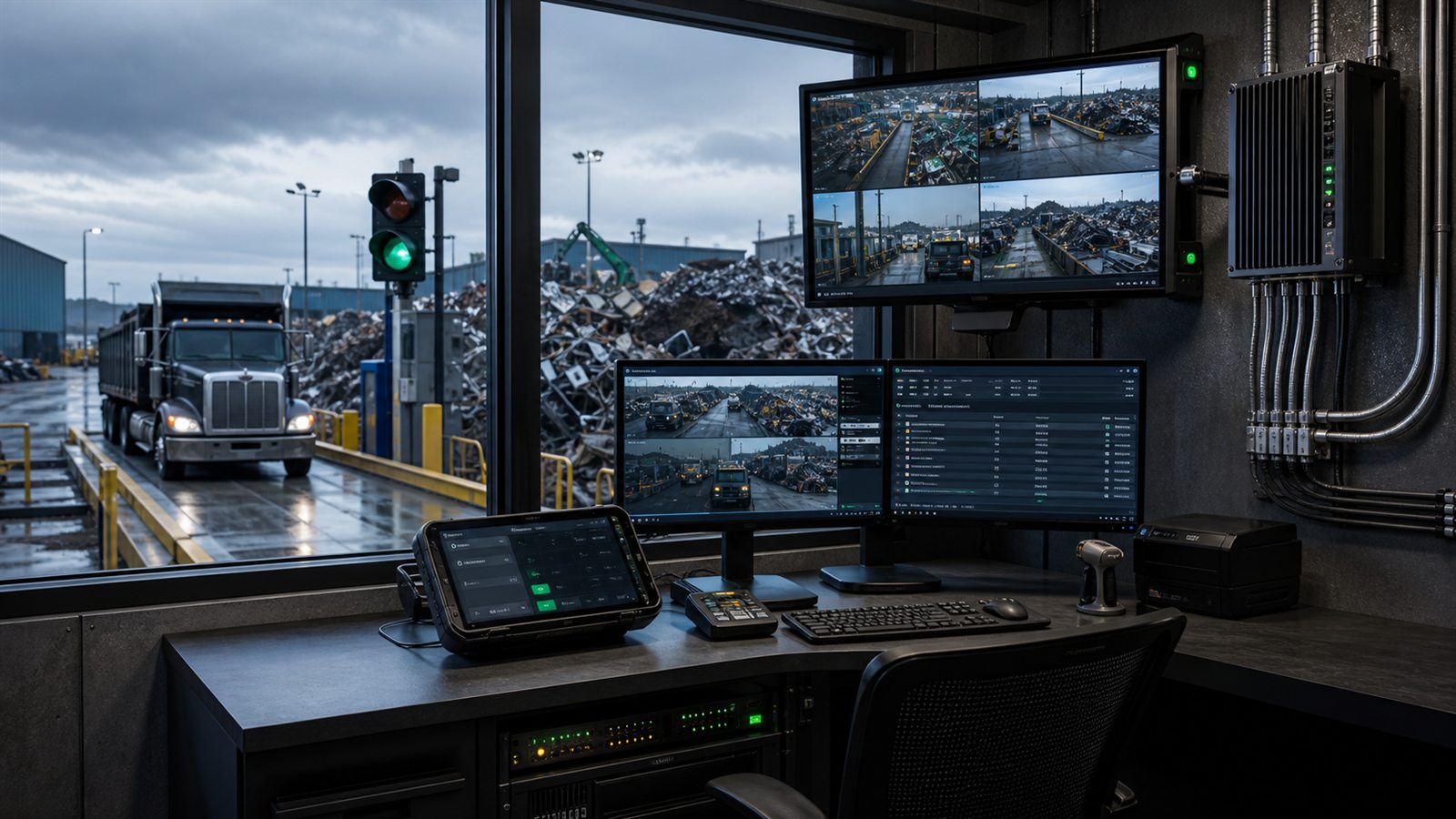
Metals recycling IT support
Recycling operations depend on scale systems, seller records, yard cameras, rugged connectivity, and reporting that has to survive dust, weather, heavy equipment, and multi-yard complexity. Treo supports the technology chain behind the yard, not just the office network beside it.
Metals recycling technology has to connect scale stations, inventory platforms, seller identification, accounting, cameras, gate controls, yard connectivity, and reporting. The systems are tightly connected, but the environment is much harder than an office.
Generic IT support often treats the yard as an edge case. Treo starts with the operating chain that keeps trucks moving, transactions accurate, and records audit-ready.
The scope depends on the yard, platform stack, and number of locations. The work is always grounded in keeping transaction flow, records, infrastructure, and reporting reliable.
| Operational area | What tends to break | What Treo handles |
|---|---|---|
| Scale systems | Scale downtime stalls trucks, transaction capture, camera evidence, peripherals, tickets, and revenue flow. | Western Scale support, scale station infrastructure, peripheral troubleshooting, transaction workflow reliability, and vendor coordination. |
| Recycling platforms | Inventory, pricing, ticketing, and accounting workflows drift apart or depend on manual correction. | Rematter and ScrapIT support, system administration, workflow configuration, integration support, and operational reporting. |
| Multi-yard reporting | Management cannot get a consistent view across yards without spreadsheet rebuilds or cleanup. | Data standardization, cross-yard consolidation, dashboard support, naming consistency, and reporting workflows. |
| Compliance records | Seller identification, images, hold periods, transaction records, and environmental documentation are hard to retrieve cleanly. | Compliance workflow support, record structure, audit-ready documentation, retention processes, and system access controls. |
| Yard infrastructure | Office-grade gear fails in dust, weather, vibration, temperature swings, and rough physical conditions. | Rugged hardware planning, protected cabling, yard networking, wireless coverage, cameras, and environmental protection. |
| Mobile and field work | Pickup crews, remote yards, field documentation, and mobile transaction workflows lose connectivity or consistency. | Mobile device management, field connectivity, route and dispatch support, remote access, and off-yard documentation workflows. |
Metals recycling support is valuable when it respects the order of operations: keep the scale reliable, harden the environment, connect the platforms, standardize the data, and support the yard when transaction flow is at risk.
The starting point is knowing what happens from arrival to ticket close, which systems own each step, and where downtime or record gaps create operational risk.
Hardware, cabling, wireless coverage, camera placement, and network design need to match the physical environment instead of assuming office conditions.
Scale data, images, inventory, seller records, and reporting should flow through the operation without duplicate entry or fragile workarounds.
Consistent naming, categories, permissions, and workflows reduce manual cleanup and give management a clearer view across locations.
When scales, cameras, ticketing, or yard connectivity fail, the response has to account for trucks waiting, records being captured, and revenue moving through the site.
The office still matters, but the yard changes the support model. The systems closest to revenue and compliance need different decisions than normal desk support.
| Area | Office IT assumption | Recycling yard reality |
|---|---|---|
| Environment | Equipment sits in controlled spaces with clean power, clean air, and predictable access. | Dust, weather, vibration, heavy equipment, temperature swings, and outdoor runs change hardware and placement choices. |
| Downtime | A workstation issue slows one employee. | A scale issue can stop trucks, delay tickets, interrupt payment, and create records that need later correction. |
| Records | Files and emails are the main documentation concern. | Seller records, images, weights, tickets, hold periods, and environmental documentation must stay tied to transactions. |
| Locations | Each office can be supported mostly on its own. | Multi-yard operations need consistent data, reporting, permissions, and support standards across sites. |
These are the questions recycling operations usually ask when they are deciding whether they need a support partner with scale, yard, and reporting context.
Yes. Treo has direct experience supporting Western Scale in recycling environments, including the integrations, peripherals, and infrastructure around scale stations that keep transaction flow reliable.
Yes. Multi-yard data consolidation is one of the most common pain points. Treo helps standardize systems, improve data consistency, and build reporting that gives management a clear view across locations without manual spreadsheet rebuilds.
Treo supports the systems and workflows behind transaction records, seller identification, hold periods, and environmental compliance reporting. The goal is to keep compliance integrated into normal operations rather than creating a separate burden.
Recycling industry IT work usually sits alongside a broader managed IT relationship, where Treo handles both the yard systems and the surrounding environment, including users, Microsoft 365, security, and office infrastructure.
A short conversation can clarify where scale reliability, compliance pressure, reporting gaps, or rugged infrastructure issues are creating risk, and whether Treo is the right fit for the operation.