Transportation IT support
Taxi, towing, and dispatch-driven transportation teams depend on a chain of connected systems: dispatch, phones, driver devices, fleet tools, payments, and backup paths. Treo supports the whole chain so operational issues do not get treated as isolated helpdesk tickets.
Dispatch platforms assign work. Phones and radios coordinate the operation. Driver devices keep the field connected. Fleet and shop systems keep vehicles moving. Payment systems close the transaction. Each part depends on the others.
A generic IT provider can miss that operational context. Treo looks at the full chain first, then supports the systems in the order that protects dispatch, revenue, and customer response.
The scope changes by fleet, dispatch model, and service area. The support pattern stays the same: protect the connected operational systems that keep work moving.
| Operational area | What tends to break | What Treo handles |
|---|---|---|
| Dispatch platforms | Queue failures, slow dispatch screens, upgrade issues, server or database instability, and unclear vendor handoffs. | Support around iCabbi, TaxiCharger, TaxiCaller, TowBook, TOPS, and the infrastructure those systems depend on. |
| Mobile and driver connectivity | Driver devices lose connectivity, apps fail in the field, GPS updates lag, or replacement devices are not ready. | Mobile device management, device provisioning, driver app support, cellular and Wi-Fi troubleshooting, and rollout coordination. |
| Fleet and shop systems | Maintenance systems, tracking tools, or shop workflows fall out of sync with the dispatch operation. | Mitchell 1, Tracker Management, fleet maintenance systems, vehicle tracking, reporting, and shop connectivity support. |
| Communications | VoIP, call routing, radio coordination, or queue management creates gaps between customers, dispatchers, and drivers. | Phone systems, queues, routing, communications redundancy, and coordination with telecom or radio vendors. |
| Payments and transactions | In-vehicle payment terminals, card processing, invoicing, or transaction systems interrupt revenue collection. | Payment connectivity troubleshooting, terminal support coordination, invoicing system integration, and reliability checks. |
| Continuity and recovery | The team has backups, but nobody is sure whether dispatch, phones, and payments can recover quickly during an outage. | Monitoring, backup verification, failover planning, recovery testing, and practical continuity planning for extended outages. |
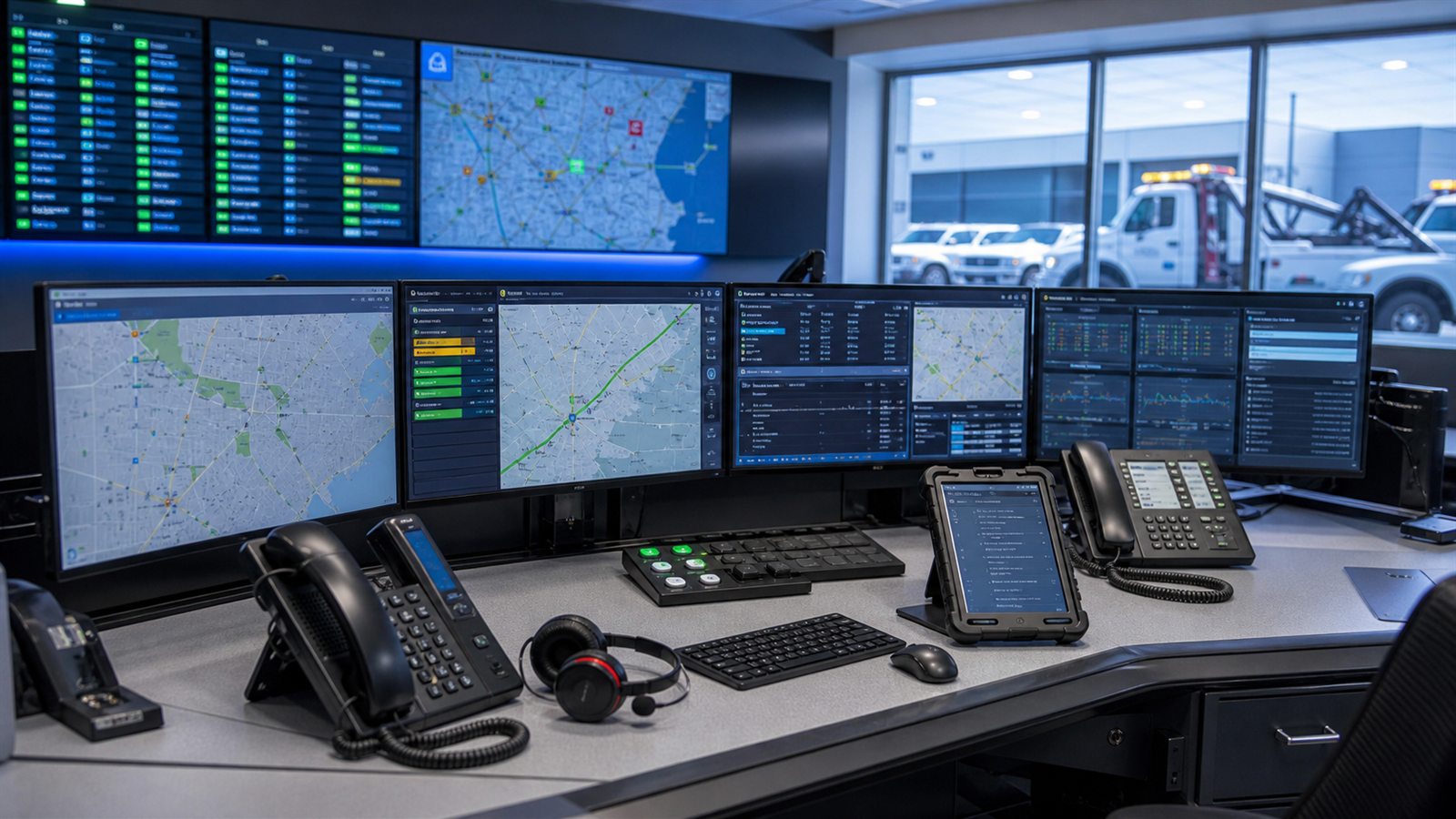
Transportation support is not valuable because it knows a list of products. It is valuable when the provider understands which failures stop work immediately and which changes can wait for a quieter window.
Dispatch, communications, mobile devices, fleet tools, payments, backups, vendors, and locations are mapped so support decisions are based on the actual operation.
Connectivity gaps, single points of failure, unmonitored systems, and unclear vendor handoffs are addressed before they become dispatch interruptions.
The goal is less manual workaround, fewer disconnected systems, and cleaner handoffs across a fast-moving operation.
Monitoring and alerting focus on operational risk, not just generic device status. Critical systems should surface issues early.
Support expectations, escalation paths, and continuity planning are structured around a 24/7 operation where downtime at any hour has real cost.
The same laptop, network, and Microsoft 365 work still matters. It just sits underneath a faster operating model with less room for vague ownership.
| Area | Common IT assumption | What changes in transportation |
|---|---|---|
| Support timing | Most issues can wait for the next business day. | Dispatch, phones, payments, and driver connectivity can affect revenue at any hour. |
| System ownership | The vendor owns the application and IT owns the computers. | The real failure often sits between application, network, device, telecom, and vendor responsibilities. |
| Locations | The office network is the main environment. | Dispatch centers, shops, vehicles, field devices, and remote staff all become part of the support footprint. |
| Change windows | Updates happen when staff are away from their desks. | Changes need to respect call volume, shift timing, dispatch coverage, and driver availability. |
These are the questions transportation companies usually ask when they are deciding whether they need a support partner with dispatch and fleet context.
Yes. Treo has direct experience supporting iCabbi in dispatch-driven transportation environments, including the infrastructure, connectivity, and surrounding systems that keep the platform running reliably.
Yes. Treo understands that dispatch-driven operations do not pause for business hours. Support, monitoring, and continuity planning are structured around the reality that downtime at any hour has the same business impact.
Multi-location and mixed-fleet operations are common, and Treo supports them regularly. Many transportation operations span multiple dispatch centers, vehicle types, or service areas, and Treo helps standardize and support the technology across locations so the operation works as one system.
Dispatch-specific IT work usually sits alongside a broader managed IT relationship, where Treo handles both the operational systems and the surrounding environment, including office staff support, Microsoft 365, security, and general infrastructure.
A short conversation can clarify where dispatch continuity, communications, payments, mobile connectivity, or fleet systems are creating risk, and whether Treo is the right fit for the operation.